Data is not the deliverable
The Clinton 2016 campaign had an algorithm called Ada that ran resource allocation models across every swing state. It was sophisticated, well-funded, and wrong. The campaign stopped conducting state polls in the final three weeks. Analytics results were not shared with the broader war room. The model's confidence replaced human judgment at the moment it mattered most.
Meanwhile, Obama 2012 polled 9,000 voters every night, ran 66,000 election simulations before sunrise, and still required a 54-person analytics team to translate those outputs into decisions about where to buy ads, which doors to knock, and what messages to deploy. The data did not decide. The data informed people who decided.
Most field systems produce activity, not clarity. Leadership receives dashboards, charts, and raw submissions but still does not know what to do next. Gartner found that marketing analytics influence only 53 percent of decisions. A quarter of decision-makers do not review the analytics provided to them at all. Another quarter reject the recommendations.
That is not a data problem. It is a briefing problem.
The four levels of field intelligence
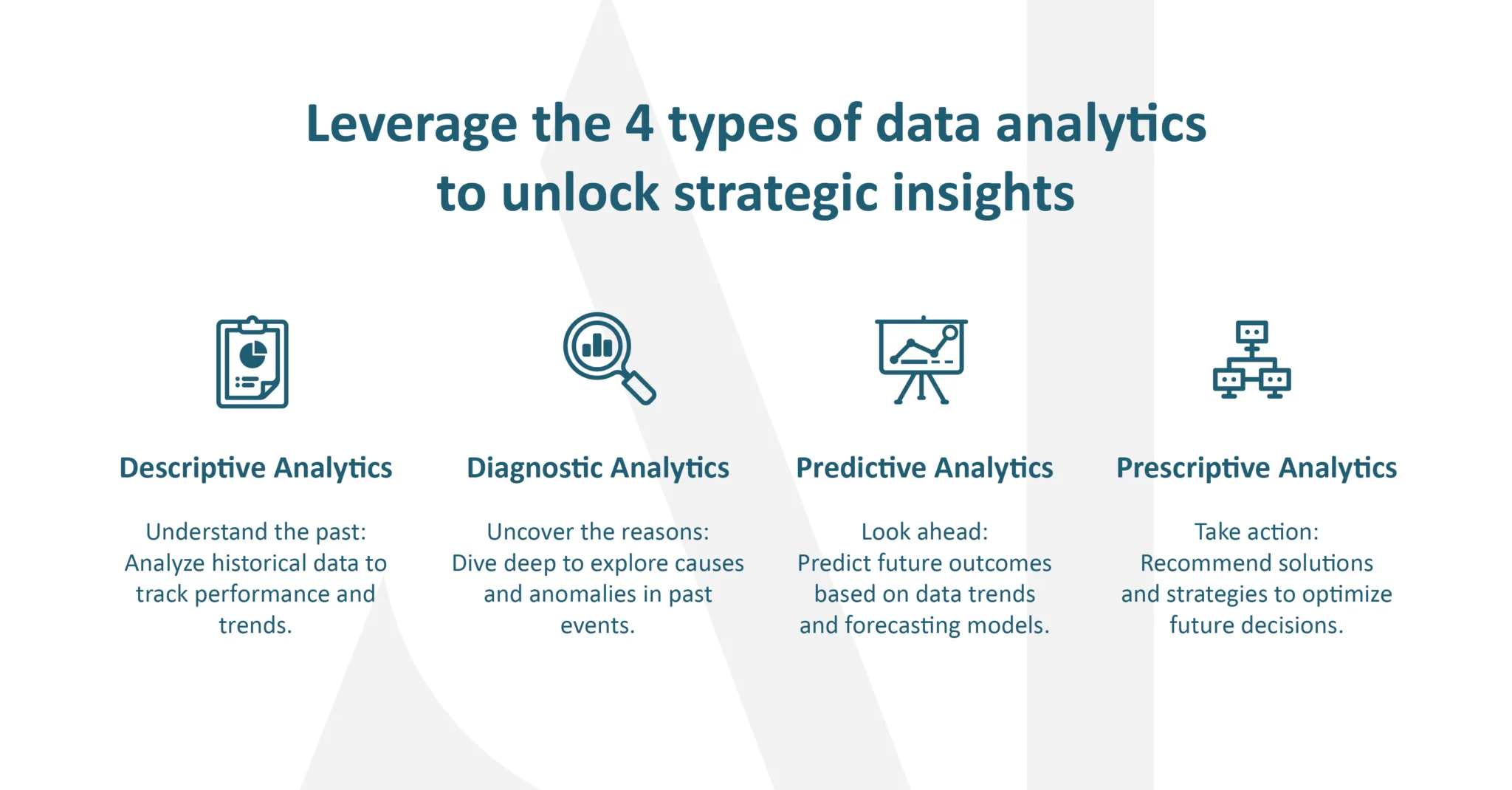
There are four types of analytics, and most campaign operations never get past the first.
Descriptive: what happened
This is the baseline. How many forms were submitted. How many wards reported. What the turnout numbers show. Almost every field system can produce this. It is necessary but not sufficient.
Diagnostic: why it happened
This is where most systems fail. When a metric moves, leadership needs to know whether it was driven by a specific event, a messaging change, an opponent's action, or a data artifact. Obama's nightly polling was designed for exactly this. When numbers shifted, the team could trace the cause to a specific ad buy or news cycle within hours.
Without diagnostic capability, every dashboard movement triggers the same response: confusion followed by a meeting.
Predictive: what will happen
Obama's 66,000 nightly simulations produced probability distributions for winning each swing state. Individual voters had support scores estimating the likelihood they would vote for the campaign's candidate. Field organizers received dynamically ranked call lists based on persuadability, not just geography.
Predictive analytics require historical data and modeling capability. But even directional predictions, like whether a sentiment trend is rising or fading, change how a campaign allocates attention.
Prescriptive: what to do about it
This is the rarest level. By mid-campaign, Obama's analytics team had taken command of media buying. The models did not just report probabilities. They prescribed where to spend money, which voters to contact, and which messages to deploy in which markets.
Most campaigns never reach prescriptive because it requires something harder than data science. It requires organizational trust. Leadership must be willing to let analysis drive resource allocation, not just inform it.
Why teams drown in dashboards
The problem is almost never the absence of analytics. It is the absence of editorial judgment in the system.
Cognitive research shows that information overload, time pressure, complexity, and uncertainty compound each other. A decision-maker facing all four, which is the norm in a campaign war room, experiences degraded response times, misprioritization, and eventually disengagement. When every metric is presented with equal weight, people either try to process everything and slow down, or stop looking entirely.
The military solved this decades ago. A SALUTE report forces field intelligence into six fields: size, activity, location, unit, time, equipment. The constraint is the point. It eliminates noise at the moment of capture so that the commander receives signal, not volume.
Commander's intent works the same way. Instead of presenting all available intelligence and asking leadership to draw conclusions, the briefing starts with the mission and presents only what matters for the decision. What the system chooses not to show is as important as what it shows.
A command center that counts submissions is descriptive. One that compresses the field into a few things leadership can actually act on is prescriptive. The gap between those two is where campaigns lose time.
What a usable briefing actually answers
A usable briefing is not a wall of metrics. It is directional and decision-ready. It should answer three things clearly.
What is rising
Show the issues, incidents, or sentiment shifts that actually changed since the last update. Not everything that exists. What moved.
Where it is concentrated
Leadership needs location context. A national headline without ward or station concentration is rarely actionable. The difference between "water is a top issue" and "water complaints tripled in three wards south of the river this week" is the difference between awareness and action.
What action follows
The briefing should compress the field into a decision:
- redeploy staff to an underserved area
- change message framing before a rally
- investigate a station showing anomalies
- escalate an incident that crossed a severity threshold
- increase field coverage where gaps are growing
If leadership reads the briefing and still cannot decide the next move, the briefing is too weak.
Where AI helps and where it does not
AI is useful when it shortens the path from raw inputs to structured judgment. It can tag and group field submissions, extract sentiment, surface anomalies, and draft summaries faster than any human team.
But it fails in a specific and dangerous way. Research on LLM-generated summaries found that in complex domains, up to 75 percent of content can be hallucinated. Not obviously wrong. Quietly invented: fabricated metrics, confident assertions without grounding, recommendations that sound reasonable but are not connected to any source data.
The result is what might be called decorative analytics. Summaries that are technically fluent but operationally empty. They restate what the data says without identifying what matters. They provide the appearance of intelligence without the substance.
The right standard for AI in a command center is simple: use it to compress and surface, but keep humans in the loop for judgment. The briefing should carry a clear recommendation, not a buffet of options. And every assertion should link back to the underlying evidence so leadership can verify before they act.
GroundWatch uses AI to extract issues and sentiment from field submissions, generate location-aware briefings before rallies, and surface rising trends. But every briefing links to the raw evidence trail. Leadership sees the recommendation and the proof, not just the summary.
The practical takeaway
The best command centers are not data sinks. They are decision systems.
The progression is clear: from descriptive to diagnostic to predictive to prescriptive. Most operations stall at descriptive because they invest in collection and dashboards but not in the editorial layer that turns volume into judgment.
When field intelligence becomes a short, trusted, repeatable briefing rhythm, leadership moves faster and the field feels the difference.