Blind spots are usually workflow failures
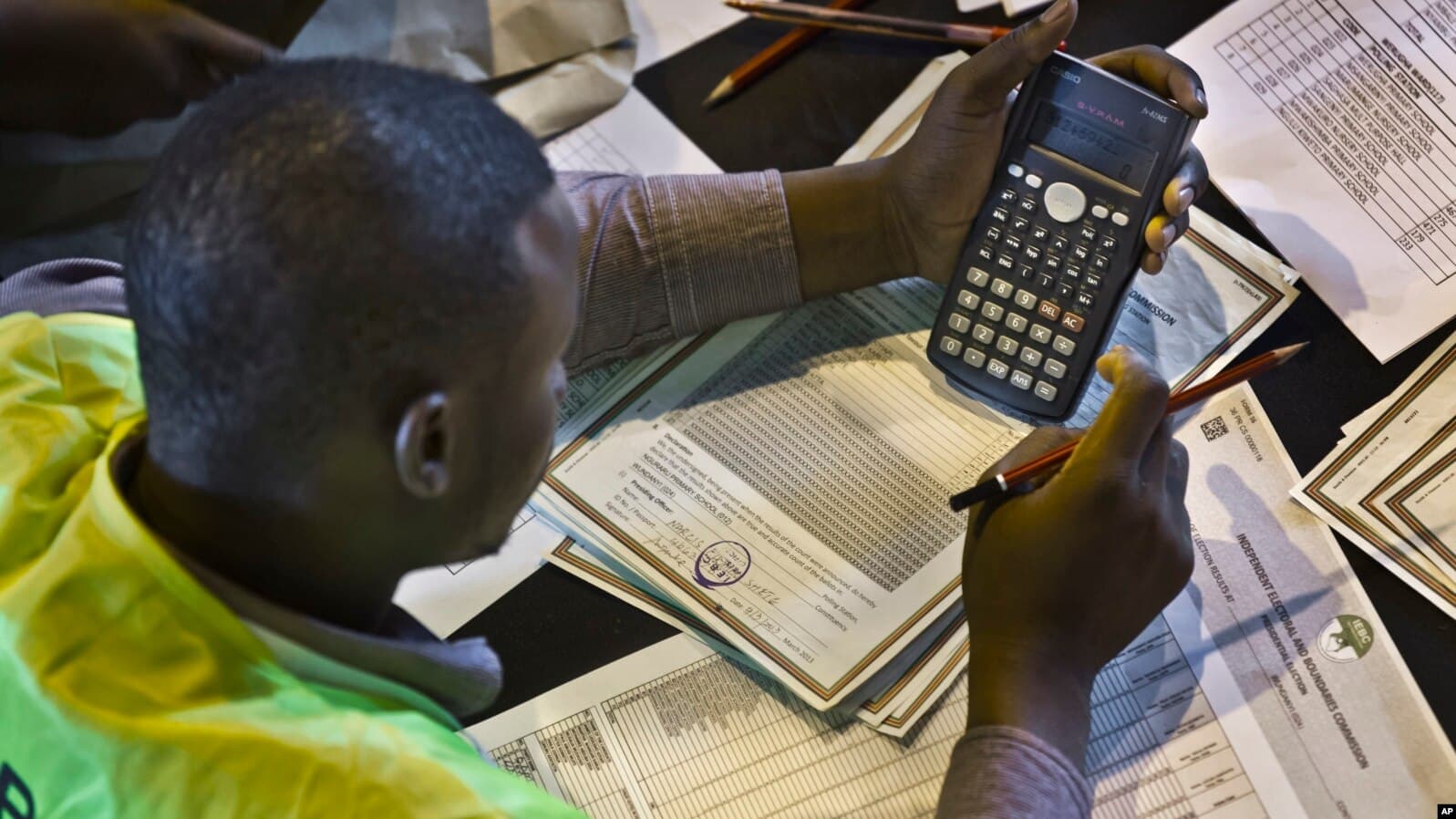
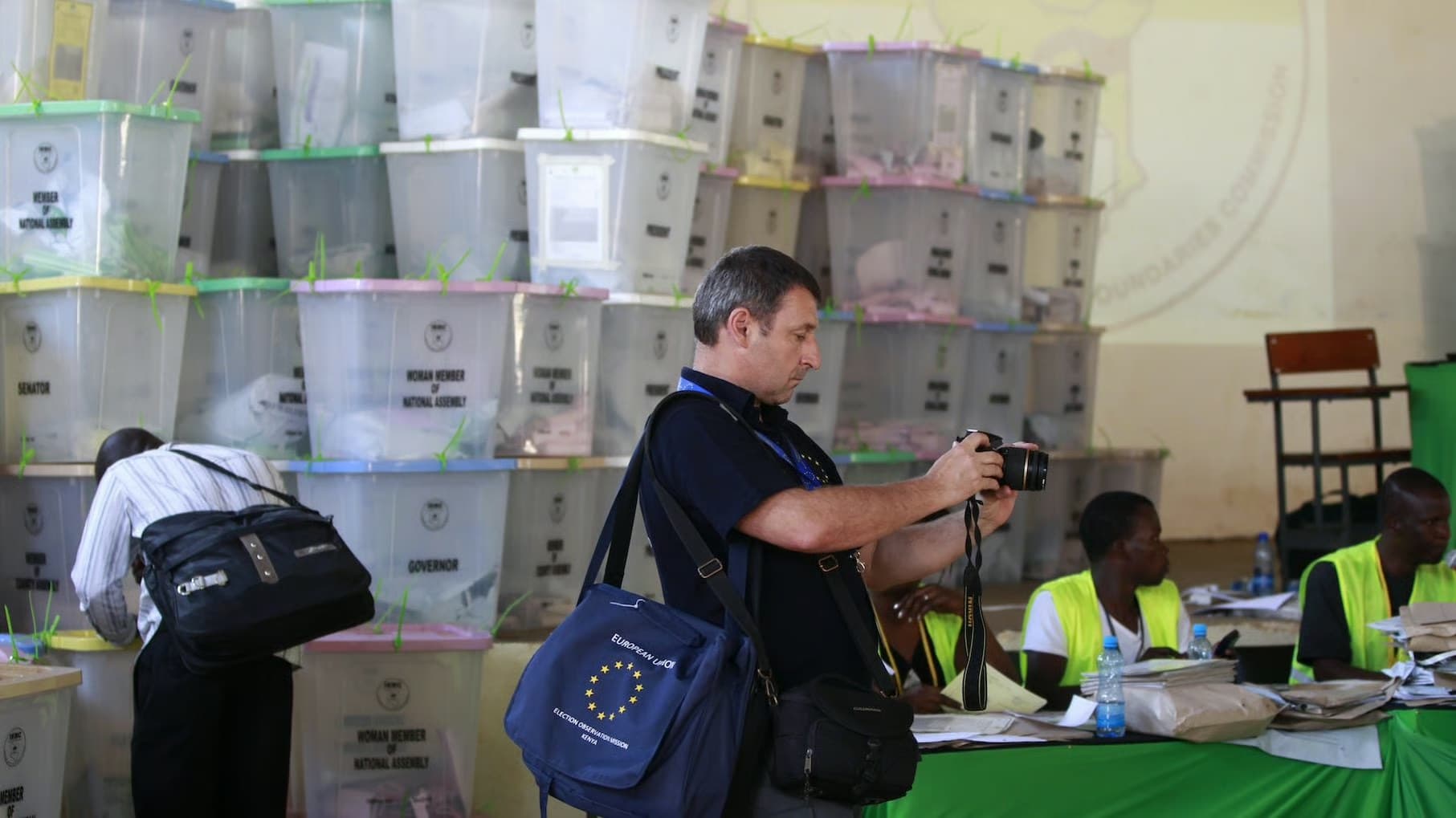
In 2017, international observers from the EU and AU broadly endorsed Kenya's presidential election. Weeks later, the Supreme Court nullified it, making it Africa's first court-ordered presidential annulment. The court found that results from roughly 11,000 polling stations were unavailable for scrutiny, forms were unsigned or illegible, and the IEBC refused to provide server access when ordered by the court.
Two years later, the EU observation mission called Malawi's 2019 elections "well managed, inclusive, transparent and competitive." The Constitutional Court annulled the results after finding widespread use of correction fluid on tally sheets, physical evidence that structured observer checklists never flagged.
In Nigeria 2023, only 31 percent of presidential results had been uploaded to the IReV portal by the time the winner was declared. INEC's own IT director admitted under cross-examination that the technical failure was never reported to the hosting provider.
Observer teams rarely fail because they lack committed people. They fail because their tools observe the wrong thing at the wrong time. Polling-day procedures (queue management, ballot secrecy, visible intimidation) get watched carefully. But the consolidation and transmission of results, where elections are most vulnerable, remains a black box.
Why incidents and tallies must live in the same system
This is the structural gap no major observer organization has closed. Incident data and tally data live in separate tools, collected by different people, stored in different databases. No widely used system automatically flags: this station reported three incidents (BVAS failure, late opening, voter intimidation), so its tally results should receive extra scrutiny.
Kenya's petitioners in 2017 sought GPS coordinates of the KIEMS kits deployed at polling stations. The incident data showing which stations had failures and the tally data showing what those stations reported existed in entirely separate channels.
Research on Mexico's elections found that over 40 percent of polling-station tallies display inconsistencies, driven by poll worker education levels, workload, and form complexity. A field experiment in Afghanistan found that simply notifying polling station managers their tallies would be photographed and made public substantially reduced manipulation. Connecting observation to tallies has a deterrent effect. Separating them leaves the gap where disputes grow.
What a connected system changes
Suppose an observer reports tension, delayed opening, or disputed counting at a polling station. That context matters later when the station's form arrives for tally review.
A connected system should allow the review team to see:
- the form image
- the station identity
- whether there were earlier incidents at that location
- whether a second copy of the form exists
- what severity and verification status the incident carries
That changes review from isolated arithmetic checking into a fuller audit decision. The reviewer is not just asking whether the numbers add up. They are asking whether the numbers are credible given what happened at that station.
The situation room bottleneck
Nigeria's Civil Society Situation Room, a coalition of 70 organizations, operates two rooms on election day: an analysts' room of democracy and governance experts and a technical room running a call center and social media desk. They deploy thousands of observers. In the 2025 Anambra governorship election alone, a single partner organization recorded 35 verified violent incidents across 1,000 polling units observed.
Scale that to a national election with 176,000 polling units and the processing bottleneck becomes clear. Thousands of incoming reports must be received, verified, categorized, and escalated while the election is still underway. Analysts must manually cross-reference incident reports with incoming tally data to spot patterns. There is no automated triage, no pattern detection, no escalation engine.
This is the same problem the military calls alert fatigue. When operators receive too many signals with equal weight, they either try to process everything and slow to a halt, or stop responding entirely. Election situation rooms across West Africa face exactly this: a flood of reports with no built-in hierarchy telling the team which ones matter most right now.
A useful observer workflow should make it easy to:
- capture location-aware incidents with GPS and timestamps
- attach photo evidence and severity levels
- group incoming work by urgency and station
- surface patterns across stations automatically
- preserve an audit trail from field report to final disposition
The goal is not more reporting. The goal is faster situational clarity.
Evidence that holds up in court
The gap between operational intelligence and legal evidence is wider than most observer teams realize.
Kenya's 2017 Supreme Court required a standard of proof higher than civil balance of probabilities. The court treated IEBC's refusal to provide server access as an adverse inference, ruling partly against IEBC because it failed to comply with the scrutiny order. In Nigeria 2023, the EU observation mission's final report was admitted as evidence in the Presidential Election Petition Tribunal. Petitioners had to pay INEC 6 million Naira to obtain printed BVAS records from specific states.
For digital evidence to hold up, three conditions must be met: authenticity (the file is linked to a verified source), integrity (a cryptographic hash confirms no modification), and a documented chain of custody. A regular smartphone photo carries none of these guarantees. Metadata can be stripped or altered. Screenshots and narrative reports without corroborating technical evidence face significant admissibility challenges.
Most observer organizations produce narrative reports useful for political assessment but weak as legal evidence. When incidents are not documented with GPS-stamped, timestamped evidence at the moment they occur, they cannot be reconstructed later to evidentiary standards. Reports written hours after the fact are treated as hearsay in many jurisdictions.
Real-time observation changes what is possible
The most effective verification model is Parallel Vote Tabulation, deploying trained observers to a statistically representative sample of stations to independently report official results in real time. NDI has supported over 200 PVTs in more than 52 countries since 1988. Ghana's CODEO runs PVT every election cycle and confirmed official results by midnight in 2024.
But even PVT is a verification tool, not an integration tool. It confirms whether the official tally matches the citizen count. It does not cross-reference incidents with results. It does not flag that a station where violence was reported also shows an arithmetic anomaly on its tally form.
The organizations that will close the observer blind spot are the ones that connect real-time incident capture, tally verification, and escalation into a single operational workflow. Not three tools feeding three dashboards. One evidence trail with different views for different teams.
GroundWatch connects these layers. Field observers capture location-aware incidents with photos, GPS, and severity levels. Tally forms flow through OCR and review queues. When a station has both incident reports and tally anomalies, the review team sees the full picture, not just the arithmetic, but the context around it. Leadership sees coverage, risk concentration, and unresolved stations in real time.
The practical takeaway
Observer teams avoid blind spots when they stop treating incidents and tally review as separate universes.
The pattern is consistent across Kenya, Nigeria, and Malawi: courts set a higher standard than observers did. The evidence existed but lived in disconnected systems. Incidents were not linked to stations. Stations were not linked to forms. Forms were not linked to disputes.
The stronger model is one command workflow with different views for different teams. Field officers capture. Reviewers verify. Leadership sees the live operational picture. And when the court asks what happened at a specific station, the answer is one search away, not scattered across three tools and a filing cabinet.